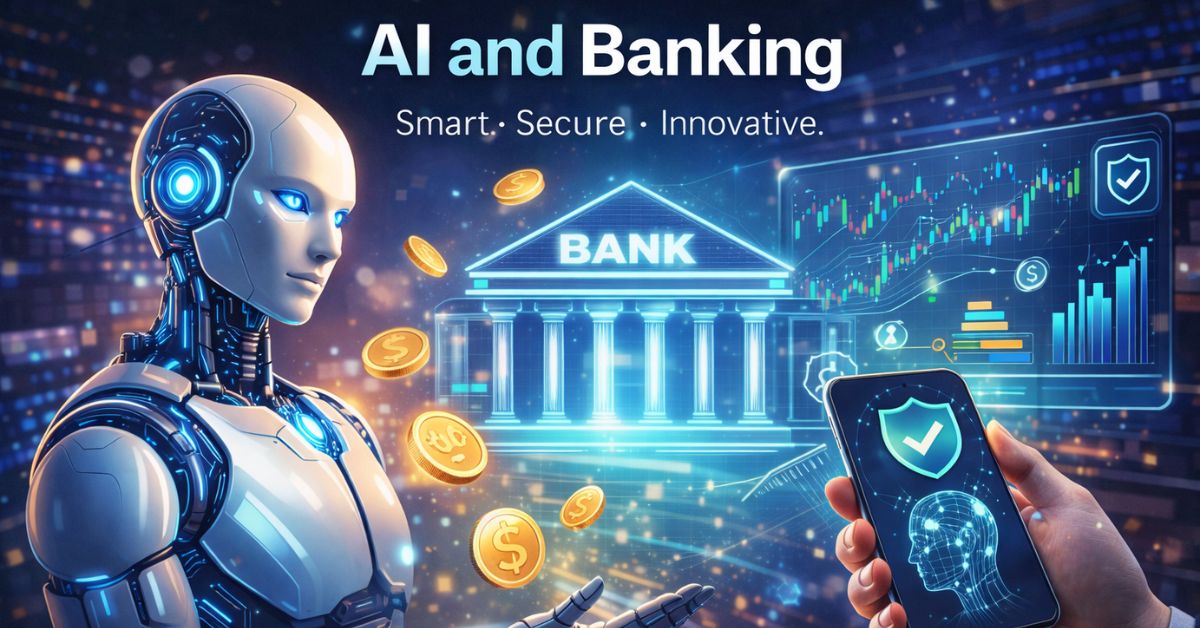
The banking sector stands on the brink of a profound transformation driven by AI and banking integration. Artificial intelligence in banking automates routine tasks, enhances security, and delivers personalized customer experiences like never before.
From chatbots handling inquiries to advanced algorithms detecting fraud in real time, AI banking solutions revolutionize operations for traditional banks and fintech startups alike. As customer expectations rise for faster, more secure services, banks adopt AI in banking to stay competitive.
This shift boosts efficiency while opening new avenues for innovation. In this article, we explore how AI and banking intersect, its key applications, benefits, challenges, and what the future holds.
What Is AI and Banking?
Table of Contents
ToggleAI and banking refers to the application of artificial intelligence technologies—such as machine learning, natural language processing, and predictive analytics—in banking operations.
At its core, artificial intelligence in banking enables systems to process vast amounts of data, learn from patterns, and make autonomous decisions. Unlike traditional rule-based software, machine learning in banking allows algorithms to improve over time with more data.
This leads to smarter automation in areas like customer interactions and risk assessment. AI banking solutions range from simple chatbots to complex predictive models that forecast market trends or customer behavior.
Banks leverage these tools to reduce costs, minimize errors, and enhance service quality. Ultimately, AI and banking create a more agile, customer-centric financial ecosystem.
How AI Is Transforming the Banking Industry
AI reshapes every facet of banking, from front-end customer interactions to back-office compliance. Its ability to analyze data at scale drives this change.
Banks now deploy AI in banking for predictive maintenance of ATMs, personalized marketing, and streamlined regulatory reporting.

The Ultimate Guide to Fraud Detection in Banking
AI in Customer Service
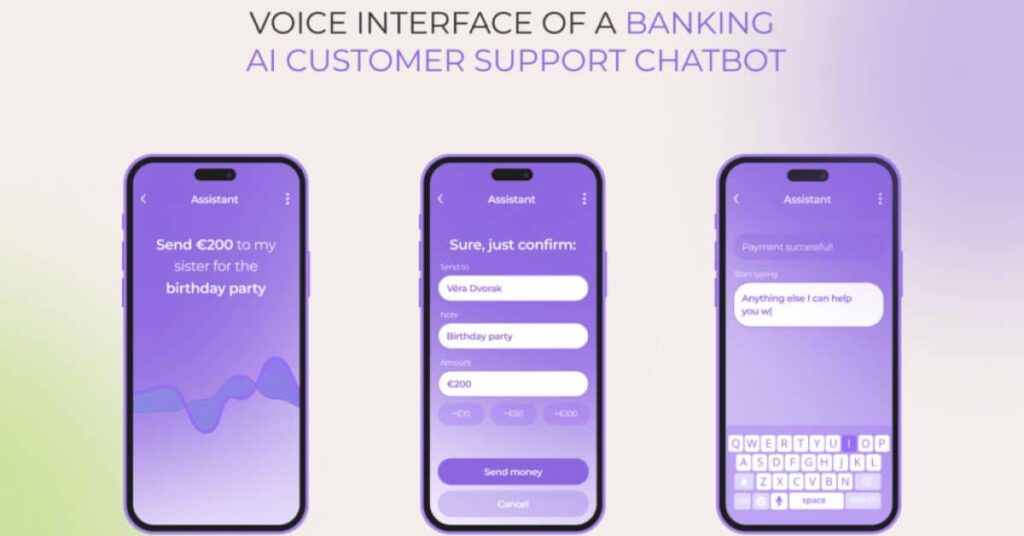
AI customer service in banks shines through virtual assistants and chatbots. These tools handle routine queries 24/7, from balance checks to transaction disputes.
Powered by natural language processing, they understand context and provide human-like responses. This frees human agents for complex issues, improving overall satisfaction.
Personalization takes it further—AI analyzes spending patterns to offer tailored advice, like savings tips.
AI in Fraud Detection
AI fraud detection in banking proves game-changing. Traditional methods rely on static rules, but AI uses machine learning to spot anomalies in real time.
It monitors millions of transactions, flagging unusual patterns like sudden overseas spending. This reduces false positives and catches sophisticated fraud faster.
Banks report significant loss reductions with these systems.
AI in Credit Scoring & Loans
Machine learning in banking revolutionizes credit decisions. AI assesses alternative data—social media, utility payments—to score applicants with thin credit files.
This expands access to loans for underserved groups while lowering default risks through accurate predictions.
Automation speeds approvals from days to minutes.
AI in Risk Management & Compliance
AI enhances risk management by modeling scenarios like economic downturns. It ensures compliance by automating report generation and monitoring regulations.
Predictive tools forecast operational risks, helping banks proactively mitigate threats.
Benefits of AI and Banking
Integrating AI and banking yields substantial advantages. Efficiency tops the list—automation cuts processing times and operational costs by up to 30% in some cases.
Accuracy improves dramatically, reducing human errors in compliance and lending.
Security strengthens with proactive fraud detection. Customer loyalty grows through personalized experiences and faster service.
Innovation flourishes as banks develop new products, like AI-driven investment advice.
- Faster decision-making for loans and approvals
- Cost savings through streamlined operations
- Enhanced personalization boosting retention
- Stronger regulatory compliance
Overall, AI banking solutions position institutions for sustainable growth in a digital era.
Real-World Examples of AI in Banking
Major banks lead AI adoption. JPMorgan Chase uses AI for contract review, slashing legal document analysis time.
Bank of America’s Erica chatbot assists millions with voice and text queries.
HSBC employs AI fraud detection to monitor transactions globally. Wells Fargo leverages machine learning for personalized wealth management.
Fintechs like Revolut use AI for real-time spending notifications and currency exchange predictions.
These examples demonstrate tangible impacts of AI in banking.
Challenges and Ethical Concerns
Despite benefits, AI and banking faces hurdles. Data privacy remains critical—AI requires vast datasets, raising breach risks.
Bias in algorithms can lead to unfair lending decisions if training data is skewed.
Explainability poses issues; “black box” models make it hard to understand decisions, complicating regulatory audits.
Job displacement concerns arise as automation handles routine roles.
Ethical use demands transparent, fair AI governance to build trust.
Future of AI and Banking (2025 and Beyond)
By 2026 and beyond, AI and banking will deepen integration. Generative AI will enable hyper-personalized services, like custom financial plans.
Autonomous agents may handle complex tasks, from portfolio management to dispute resolution.
Quantum computing could supercharge risk modeling. Open banking APIs will fuel AI-driven ecosystems.
Sustainability-focused AI will optimize green lending. However, robust regulations will ensure ethical deployment.
The future promises inclusive, efficient banking powered by AI.
FAQs About AI and Banking
What is AI and banking?
AI and banking involves using artificial intelligence technologies like machine learning to enhance banking operations, from customer service to fraud prevention.
How does AI improve customer service in banks?
AI customer service in banks uses chatbots and virtual assistants for instant, personalized support, available 24/7.
What role does AI play in fraud detection in banking?
AI fraud detection in banking analyzes patterns in real time to identify and prevent suspicious activities more accurately than traditional methods.
Are there risks with machine learning in banking?
Yes, risks include data bias leading to unfair outcomes and privacy concerns, requiring careful oversight.
What is the future of artificial intelligence in banking?
The future includes advanced personalization, autonomous agents, and deeper integration for more efficient, inclusive services.
Conclusion
AI and banking represent a powerful synergy reshaping the financial landscape. From enhancing security through AI fraud detection to delivering superior customer experiences, artificial intelligence in banking drives efficiency and innovation.
While challenges like ethics and regulation persist, the benefits far outweigh them when managed responsibly. As we advance into 2026 and beyond, embracing AI banking solutions will define successful institutions.
Banks that invest in AI today will lead a more secure, personalized, and accessible tomorrow. The era of truly intelligent banking has arrived.