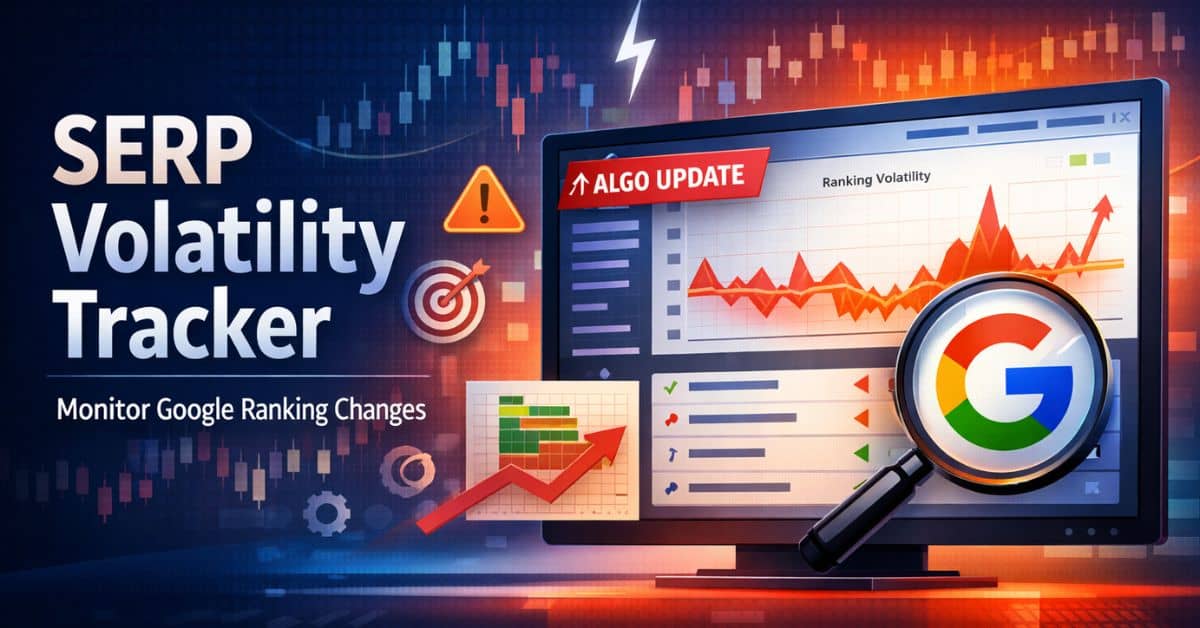
Have you ever checked your website’s Google rankings one day and seen them high, then the next day they drop? This happens a lot in SEO. It’s called SERP volatility, and a SERP Volatility Tracker helps you understand why.
SERP means Search Engine Results Page – that’s the page you see when you search on Google. Volatility means changes or ups and downs in rankings. A SERP Volatility Tracker is a tool that watches these changes every day. It shows if the changes are normal or caused by something big, like a Google ranking update.
Why does this matter? If your rankings drop, you might lose visitors and sales. Tracking SERP changes helps you fix problems fast. It tells you if the issue is with your site or if Google changed something for everyone.
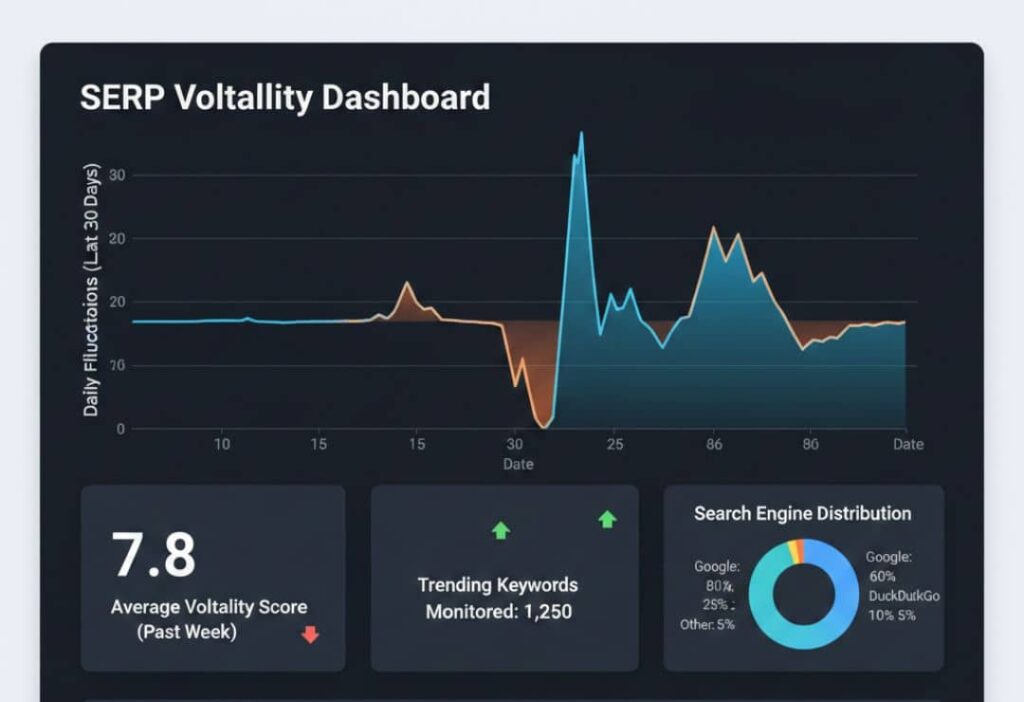
What Is a SERP Volatility Tracker? (Simple Explanation)
A SERP Volatility Tracker is like a weather app for Google search rankings. It measures how much search results shake up each day.
Tools like Semrush Sensor, Similarweb SERP Seismometer, or Wincher track thousands of keywords. They give a score – often from 0 to 10 or low to very high. A low score means stable rankings. A high score means big changes, often from a Google update.
Short answer: It’s a tool that watches Google search results for sudden shifts so you know if your ranking drop is your fault or Google’s change.
For beginners: Imagine your website is a shop on a busy street. Google decides the order of shops. A volatility tracker tells you when Google rearranges the street.
Latest SERP Changes: Why Rankings Fluctuate
Rankings don’t stay the same forever. Google updates its algorithm often to show better results. These are called Google ranking updates.
Common reasons for SERP changes:
- Google core updates: Big changes to how Google ranks sites. They happen a few times a year.
- Fresh content: New pages or updates push old ones down.
- User behavior: If people click other results more, rankings shift.
- Competitor improvements: Rivals add better content or links.
- Technical fixes: Your site speed or mobile issues get fixed (or broken).
- AI features: Things like AI Overviews change what shows on top.
In 2025 and 2026, we’ve seen more volatility from AI tools in search. For example, after core updates, rankings can swing for weeks.
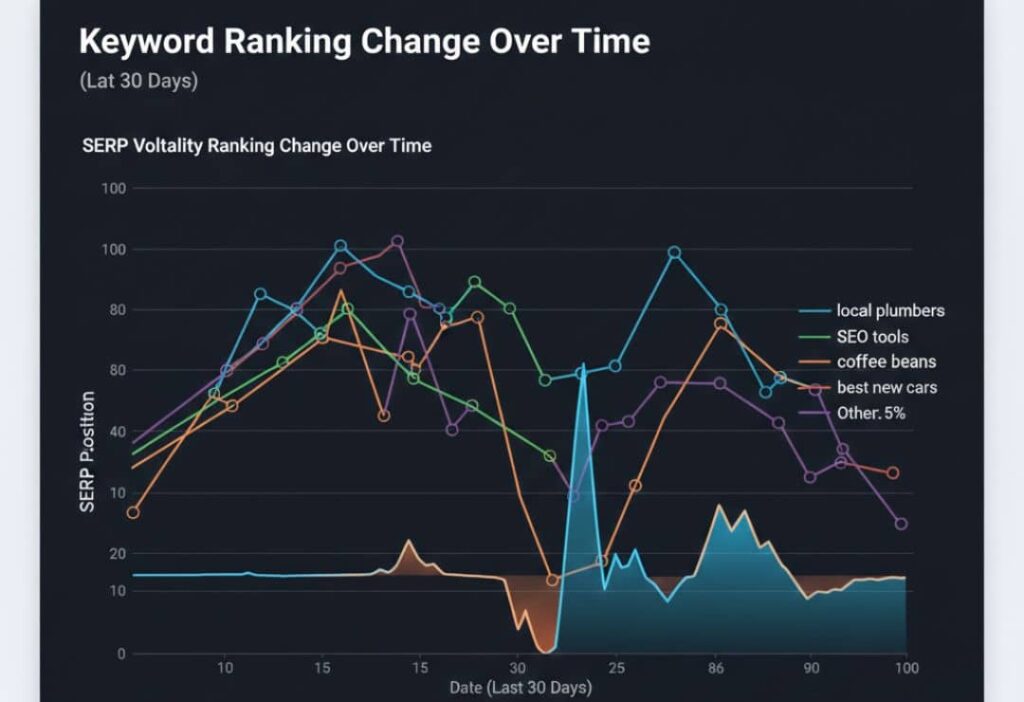
How SERP Volatility Trackers Work
These tools check Google search results daily for many keywords.
Steps they follow:
- Pick popular keywords in different topics (like health, finance).
- Search Google every day for those keywords.
- See how much the top results change from yesterday.
- Calculate a score for volatility.
- Show graphs and alerts if changes are big.
For your own site, you connect a website ranking tracker to watch your keywords. It alerts you to drops or jumps.
Example: If Semrush Sensor shows a score of 9/10, many sites see SEO rank fluctuations. If your site drops too, it might be the update – not your fault.
Key Metrics to Monitor in SERP Tracking
Watch these in your SERP monitoring tools:
- Daily position changes: How many spots a keyword moves.
- Visibility score: Overall view of your site’s ranking power.
- SERP features: Do you appear in snippets, images, or AI answers?
- Desktop vs mobile: Rankings can differ.
- Volatility index: The main score for shake-ups.
These help spot patterns in SERP volatility explained simply.
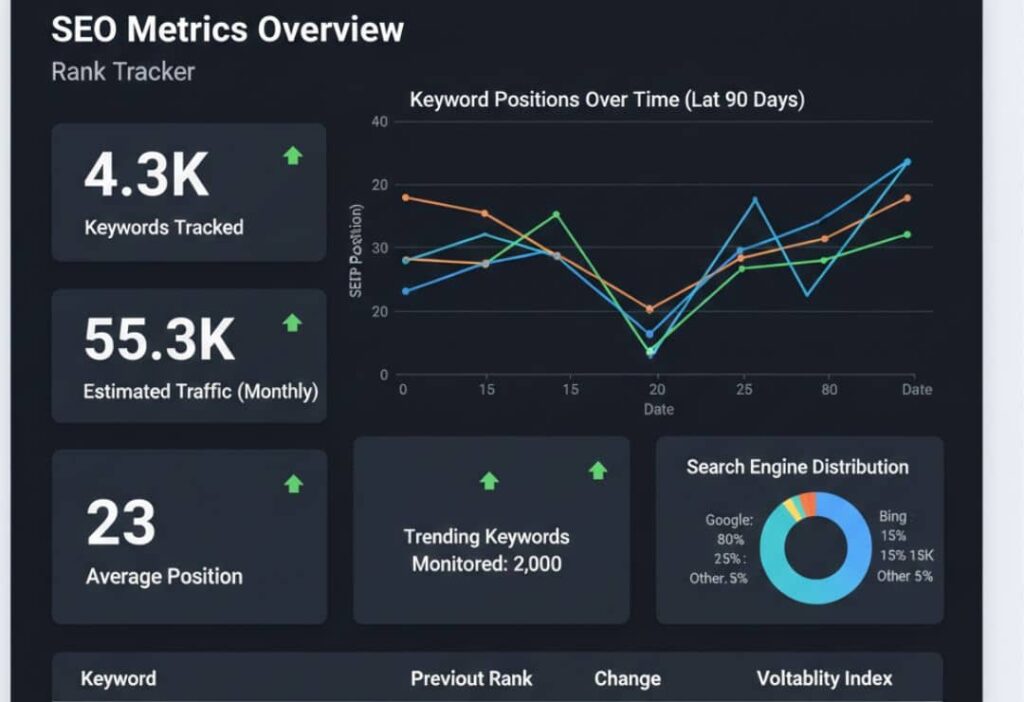
How Ranking Changes Impact Your Website SEO
When rankings drop, traffic falls. Position 1 gets most clicks. Position 10 gets few. A sudden drop can cut visitors by half or more. This hurts sales, leads, or ad income. But ups can boost everything. Good tracking lets you act fast – improve content or fix issues. If volatility is high everywhere, wait it out. Google often stabilizes after updates.
Benefits of Using a SERP Volatility Tracker
Using one gives big wins:
- Understand ranking changes quickly: Know if it’s Google or your site.
- Improve SEO strategies: Fix weak spots before big losses.
- Stay ahead of competitors: See who gains during updates.
- Save time: No manual daily checks.
- Get alerts: Email or app notices for big shifts.
It’s like having a guard for your rankings.
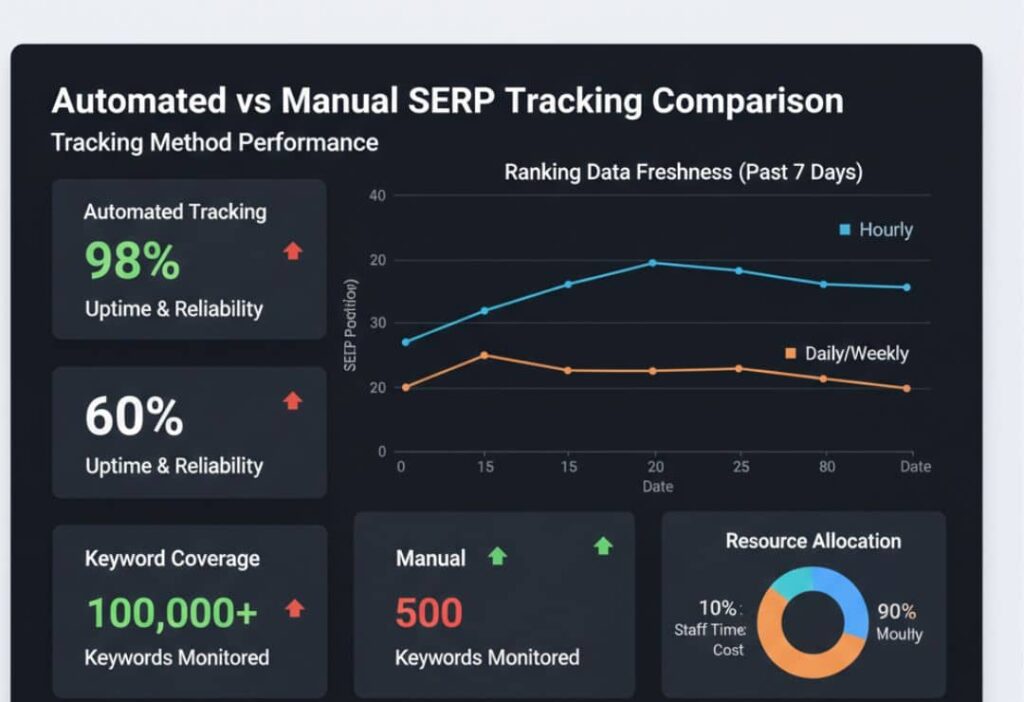
SERP Volatility Tracker vs Manual Ranking Checks
Manual checks mean searching Google yourself every day. It’s slow and inaccurate (Google personalizes results).
Tools automate it. They use neutral searches, track many keywords, and show history. Tools win for accuracy, speed, and data depth.
Step-by-Step: What to Do When Your Rankings Drop
- Check a volatility tool: Is the score high? If yes, it might be a Google update.
- Wait 1-2 weeks: Updates settle.
- Review your page: Is content helpful? Up to date?
- Fix technical issues: Speed, mobile-friendliness.
- Build quality links: Get good sites to link to you.
- Track again: See if it recovers.
- Compare competitors: What did they do better?
Stay calm – many drops recover.
Common Mistakes to Avoid in SERP Tracking
- Panic and change everything: Wait first.
- Track too few keywords: Miss the big picture.
- Ignore mobile: Many searches are on phones.
- Not checking competitors: They might improve faster.
- Forgetting content quality: Google loves helpful pages.
Future of SERP Monitoring and SEO Tools
SEO tools get smarter with AI. Future trackers will predict changes, show AI Overview impacts, and suggest fixes automatically.
With more AI in Google, volatility may rise. But good tools help you adapt fast.
FAQs About SERP Volatility Tracker
What causes high SERP volatility?
Mostly Google algorithm updates, new content, or shifts in user search habits. High scores often mean a big update.
How do I know if a ranking drop is from Google or my site?
Check a tracker like Semrush Sensor. If volatility is high across many sites, it’s likely Google. If only yours, check your site.
Are SERP Volatility Trackers free?
Some like basic Semrush Sensor or Wincher are free. Full tools for your keywords often cost money but have trials.
How often should I check SERP changes?
Daily or weekly with a tool. Set alerts for big jumps.
Can I use a SERP Volatility Tracker for any website?
Yes! Add your keywords and location to track rankings and see volatility effects.
Conclusion
A SERP Volatility Tracker is a must-have for anyone doing SEO. It explains why rankings change and helps you react smartly. Don’t guess when rankings move – track them. Regular monitoring keeps your site strong, even during Google ranking updates. Start using one today. Your website will thank you with better, steadier rankings!