The Google Penguin Update is one of the most important changes in Google’s search system. It targets websites that use bad links to trick search rankings.
First launched in 2012, the Google Penguin algorithm fights web spam by checking backlinks. Poor or fake links can hurt your site’s position in search results.
Today, in early 2026, Penguin is part of Google’s main algorithm. It works in real time. This means it checks links all the time, not just during big updates.
Knowing about the Google Penguin Update helps website owners avoid website SEO penalties. It also shows how to build good links for better rankings.
Many sites lost traffic in early Penguin updates. Now, with real-time checks, recovery is faster if you fix problems.
What Is the Google Penguin Update?
The Google Penguin Update is an algorithm that fights link spam.
It looks for unnatural backlinks, like bought links or links from bad sites. These are called manipulative links.
Good sites get natural links from trusted places. Penguin rewards those and lowers sites with spammy links.
Penguin does not always punish the whole site. It can ignore bad links or affect only some pages.
This makes search results better by showing high-quality sites.
History of Google Penguin Algorithm Updates
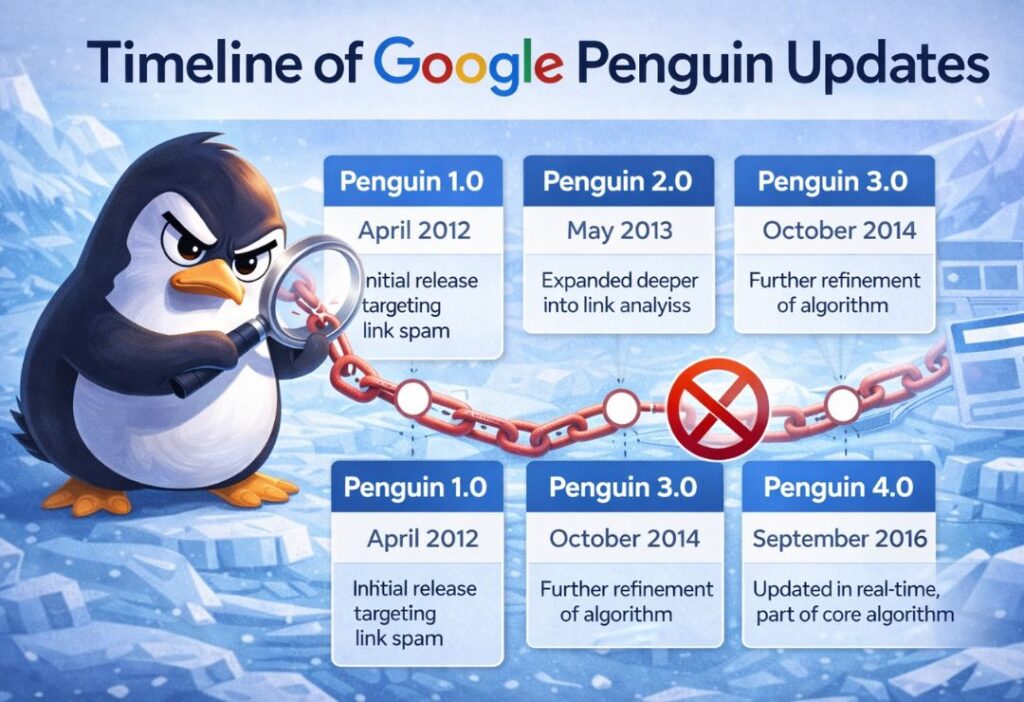
Google launched the first Penguin in April 2012. It affected about 3% of searches.
Here are the main versions:
- Penguin 1.1 (2012): Small refresh.
- Penguin 2.0 (2013): Deeper checks, affected 2.3% of searches.
- Penguin 3.0 (2014): Data refresh.
- Penguin 4.0 (2016): Big change – real-time and part of core algorithm.
After 2016, no more numbered updates. Penguin runs all the time.
No new Penguin in 2025. But spam fights continue in core updates and the August 2025 Spam Update.
Latest Changes in the Google Penguin Update
The last big change was Penguin 4.0 in 2016. It made Penguin real-time.
Now, Google crawls pages and checks links right away. Good fixes show results faster.
In 2025, Google had core updates and a spam update. These build on Penguin by fighting link spam better.
The algorithm now uses AI to spot tricky link patterns, like hidden links or sudden link spikes.
It focuses on link quality, not just quantity. Relevant, natural links help rankings.
Bad links are ignored or devalued. In bad cases, the site may lose trust.
How the Penguin Update Affects Your Website
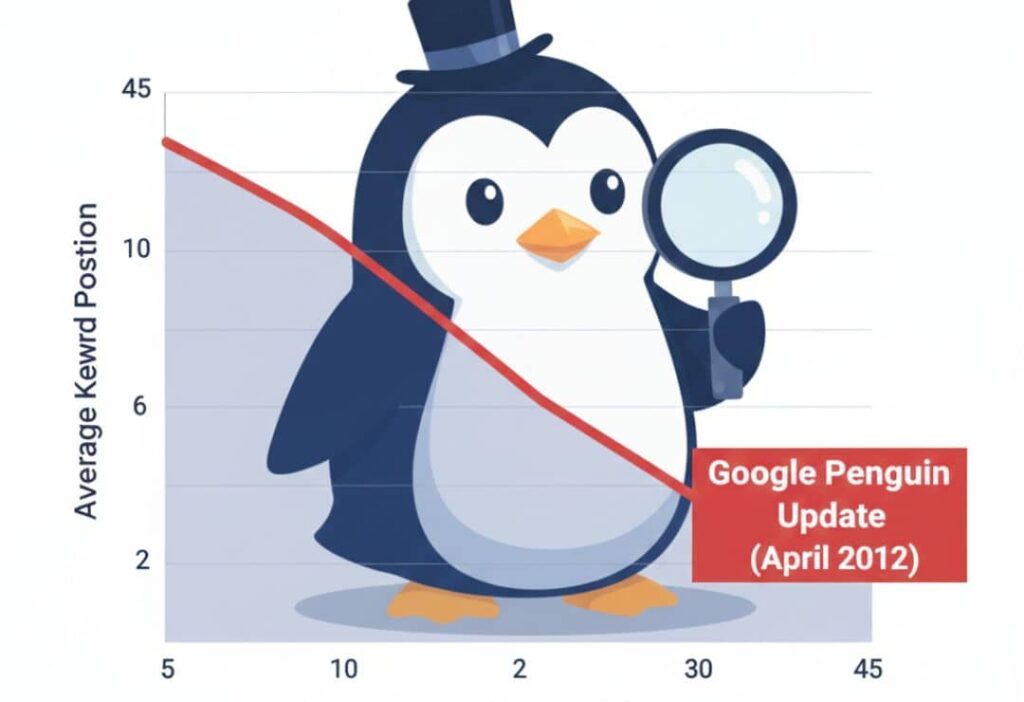
The Google Penguin Update can help or hurt your site.
Good effects: Natural, high-quality backlinks boost your rankings. Your site looks trustworthy.
Bad effects: Spammy links cause drops in traffic. This is a website SEO penalty.
For example, a site buying links from farms may fall in rankings suddenly.
Another example: Old private blog networks can trigger issues even years later.
Real-time means changes happen fast. Clean links help quick recovery.
Many sites see ups and downs during core updates because of link checks.
Strategies to Recover from a Penguin Penalty
If your site drops, it might be from bad links. Here are Penguin recovery strategies.
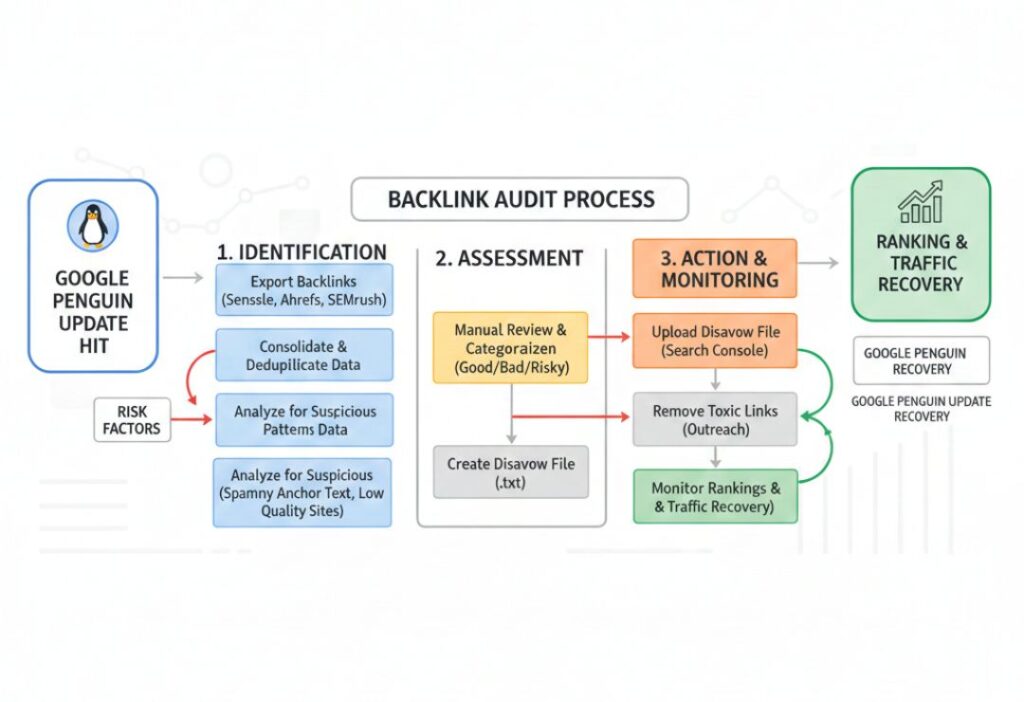
First, audit your backlinks. Use tools like Google Search Console or others.
Find spammy links: Low-quality sites, irrelevant pages, or exact-match anchors too much.
Try to remove bad links. Contact site owners and ask them to take down links.
If not, use Google’s Disavow Tool to tell Google to ignore them.
Build good new links slowly. Create great content that earns links naturally.
Wait for Google to recrawl. Recovery can take weeks or months.
Keep checking your links often.
Best SEO Practices After Penguin Update
Follow these SEO best practices after Penguin to stay safe.
- Avoid black-hat tricks like buying links or using networks.
- Focus on earning links from real, related sites.
- Make high-quality content that people want to share.
- Use varied anchor text – natural words, not always keywords.
- Do regular backlink checks.
- Build links through guest posts, partnerships, and good content.
These help long-term rankings.
Quality over quantity always wins.
Common Misconceptions About Google Penguin
Many wrong ideas about Penguin exist.
One: Penguin only punishes whole sites. No, it’s granular – affects pages or ignores links.
Two: All paid links are bad. No, sponsored links with proper tags are okay.
Three: Penguin is gone. No, it’s in the core algorithm, always working.
Four: Disavow fixes everything fast. It helps, but needs clean-up and time.
Five: More links always better. No, quality matters most.
Future of Google Penguin Update and Algorithm Changes
Penguin will stay in Google’s core system.
No big numbered updates soon. Changes come in core updates and spam fights.
In 2026 and later, expect better AI to spot spam links.
Focus on user-first content and natural links will be key.
Google may target new spam types, like AI-made link farms.
Stay updated with Google’s news.
FAQs About Google Penguin Update
What is the Google Penguin algorithm?
It is part of Google’s system that fights spammy links and rewards natural, quality backlinks.
When was the last Google Penguin Update?
The last named was Penguin 4.0 in 2016. Now it’s real-time in the core algorithm.
How do I recover from a website SEO penalty caused by Penguin?
Audit links, remove or disavow bad ones, build good links, and wait for recrawl.
Does the Penguin update still affect rankings in 2026?
Yes, it runs all the time as part of core ranking.
What are good SEO best practices after Penguin?
Earn natural links, make great content, avoid buying links, and check backlinks often.
Conclusion
The Google Penguin Update changed SEO forever by focusing on link quality.
From 2012 to now in 2026, it helps clean search results.
No big changes in 2025, but it works in every core update.
Follow good practices to avoid penalties and grow rankings.
Watch your backlinks and make helpful content.