Google SERP Volatility means the ups and downs in Google’s search results pages (SERPs). Keyword rankings can change a lot from one day to the next.
This SERP volatility is a normal part of SEO. Google keeps tweaking its system to give users the best answers.
For site owners and marketers, Google ranking fluctuations can cause big swings in visitors. Learning about Google SERP Volatility helps you handle these changes without panic.
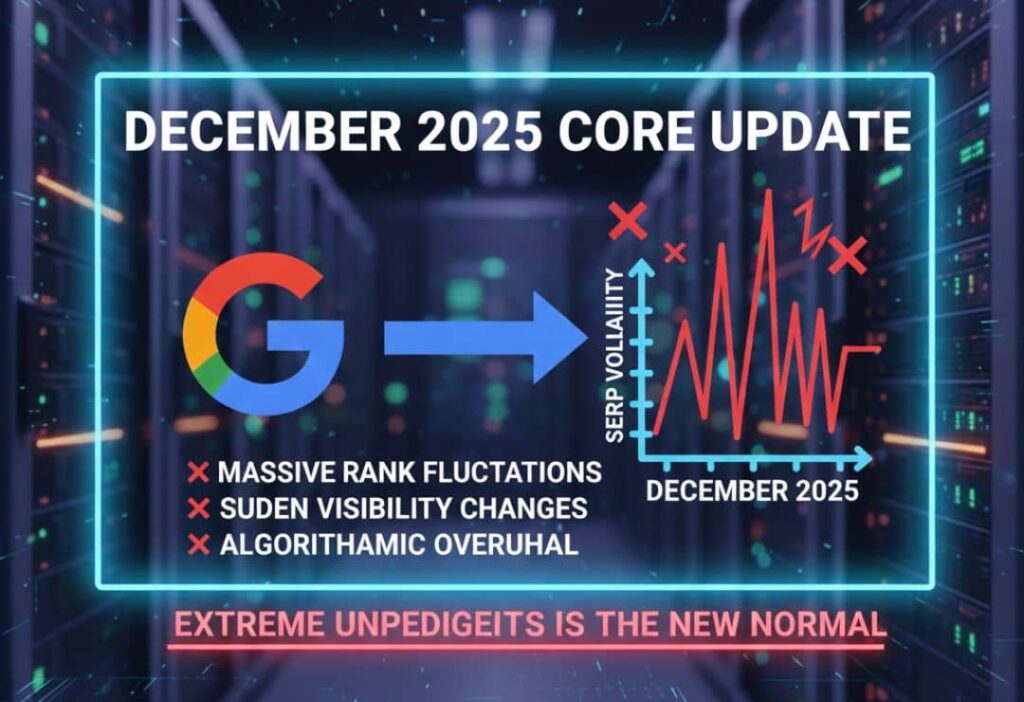
As of January 4, 2026, the recent December 2025 Core Update just finished. It started on December 11, 2025, and ended on December 29, 2025, after 18 days. This was the third core update of 2025.
It caused a lot of volatility, with peaks on December 13 and 20. Many sites saw traffic drops of 40-85%, especially in news, health, finance, and e-commerce.
Now in early January 2026, things are starting to calm down, but some effects may continue as rankings stabilize.
Understanding this helps you know if changes are from a big update or just normal shifts.
What Is Google SERP Volatility?
Google SERP Volatility measures how much search results change over time.
When volatility is high, many keywords move up or down in positions. Low volatility means results stay mostly the same.
It comes from Google’s constant tests and updates to improve search quality.
Volatility affects organic rankings, featured snippets, and other SERP features.
Even without big announced updates, small daily changes happen.
High periods often link to Google algorithm updates, but not always.
Tracking it helps separate site problems from wider changes.
What Is Google SERP Volatility?
Google SERP Volatility measures how much search results change over time.
When volatility is high, many keywords move up or down in positions. Low volatility means results stay mostly the same.
It comes from Google’s constant tests and updates to improve search quality.
Volatility affects organic rankings, featured snippets, and other SERP features.
Even without big announced updates, small daily changes happen.
High periods often link to Google algorithm updates, but not always.
Tracking it helps separate site problems from wider changes.
How Google SERP Volatility Is Measured
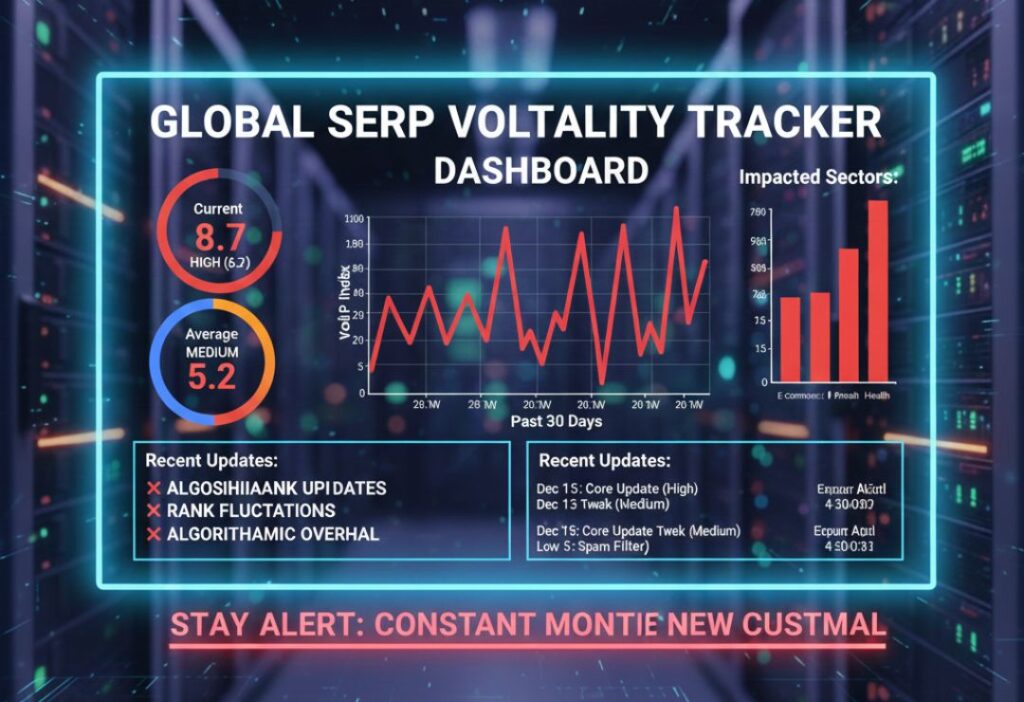
SEO tools measure Google SERP Volatility by checking thousands of keywords every day.
They compare today’s results to yesterday’s and calculate a score.
Scores differ by tool:
- Semrush Sensor uses 0-10 scale.
- MozCast shows like weather temperatures.
- Others use percentages or risk levels.
Tools track by device (desktop vs mobile) and category (like news or shopping).
High scores mean more likely an update is happening.
In December 2025, tools like Semrush showed scores over 8-9, some of the highest in the year.
Main Causes of Google SERP Volatility
The top cause is Google algorithm updates.
Core updates like December 2025 bring the biggest waves. It focused on content quality, E-E-A-T, and user value.
Spam updates and smaller tweaks also cause shifts.
Other reasons include:
- Changes in how Google crawls or indexes sites.
- New or updated content from competitors.
- Seasonal trends, like holiday searches.
- Shifts in what users search for.
- New SERP features, such as AI Overviews.
In 2025, there were three core updates (March, June, December) and one spam update in August.
The December one had unusual patterns – intense on weekends, calmer weekdays.
External factors like news events can spike volatility in certain topics.
How Google SERP Volatility Affects Search Rankings
Search ranking volatility can move your keywords many spots quickly.
This leads to sudden traffic changes – more visitors if you gain, fewer if you lose.
During the December 2025 update, some sites dropped 40-85%, especially affiliates and news publishers.
Mid positions (6-20) saw the most movement.
Short-term volatility lasts during rollouts, often weeks.
Long-term comes from ongoing small updates.
YMYL sites (health, finance) often face bigger swings.
Strong, helpful content usually recovers better.
Volatility can affect Discover and Top Stories too, not just main search.
High vs Low SERP Volatility: What’s Normal?
Low volatility is usual – small changes most days.
Normal scores are around average for the tool.
High volatility spikes during updates. December 2025 hit record levels for many trackers.
What’s normal? Daily shifts of a few positions are fine.
Big jumps across many keywords signal something wider.
In early 2026, after the update ended, volatility is dropping back to normal.
But some lingering effects happen as Google fine-tunes.
Industries like news see more ongoing changes.
How to Track and Monitor Google SERP Volatility
Good SERP tracking tools make monitoring easy.
Top recommendations:
- Semrush Sensor: Tracks by category, device, and country.
- MozCast: Simple daily reports.
- Advanced Web Ranking: Detailed algorithm tracker.
- Similarweb SERP Seismometer: Risk scale view.
- AccuRanker or Mangools: Daily insights.
Best tips:
- Check tools daily, especially after chatter starts.
- Compare general volatility to your site’s data.
- Use alerts for high scores.
- Track your important keywords in tools like Google Search Console.
This shows if your drops are personal or part of a bigger update.
In December 2025, tools synced up with big spikes on key dates.
What to Do During High Google SERP Volatility
Don’t panic or make quick big changes during peaks.
Wait for stability, like now in January 2026 after the update finished.
Key actions:
- Review content for real helpfulness and E-E-A-T.
- Update old pages with fresh info.
- Fix technical problems, like slow loading.
- Improve user experience on mobile.
- Build quality links naturally.
After recent updates, sites with deep, expert content often bounced back.
Use Google Search Console for any hints.
Focus on long-term quality over short fixes.
Many recovered in weeks or months by improving value.
Future of Google SERP Volatility

Looking ahead in 2026, Google SERP Volatility may stay high or feel higher.
AI features like Overviews change traffic even without ranking drops.
Google does fewer big announced updates but more small ongoing ones.
This means steadier but less predictable changes.
Focus shifts to multi-surface visibility (search, Discover, AI).
User-first content and trust signals will matter more.
Expect continued emphasis on quality over tricks.
Staying adaptable is key.
FAQs About Google SERP Volatility
What is Google SERP Volatility?
It is the level of changes in Google’s search results positions over time.
What causes high SERP volatility?
Mostly Google algorithm updates, like the recent December 2025 Core Update.
How do Google ranking fluctuations affect my site?
They can cause quick traffic ups or downs as positions shift.
Are SERP tracking tools accurate?
Yes, they monitor thousands of keywords and spot wide changes well.
What happened with volatility in early January 2026?
After the December 2025 Core Update ended on Dec 29, volatility is calming down.
Conclusion
Google SERP Volatility is an ongoing reality in search.
From causes like Google algorithm updates to impacts on search ranking volatility, it tests your strategy.
The December 2025 Core Update showed extreme examples, but now in January 2026, results are settling.
Use SERP tracking tools and focus on quality to ride the waves.
Prioritize helpful content and users for lasting success.
As Google search results changes continue, knowledge and patience win.
Stay informed and keep improving your site.