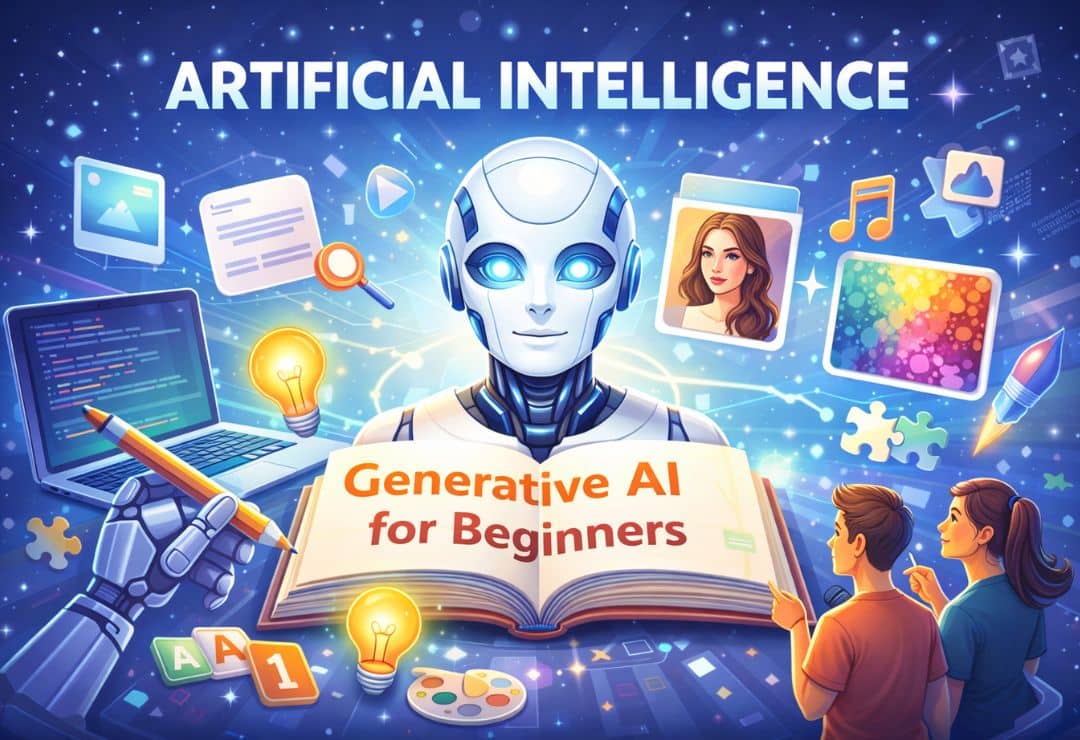
Generative AI has changed how we create content, art, and ideas. This technology allows machines to produce new text, images, code, and more from simple instructions. In recent years, generative artificial intelligence has moved from research labs to everyday tools that millions use.
Its importance grows quickly. Businesses rely on it for faster work, creators use it for fresh ideas, and students explore it for learning. As we enter 2025, generative AI models power everything from chatbots to design software. This guide explains the basics in simple terms for anyone new to the topic.
What Is Generative AI?
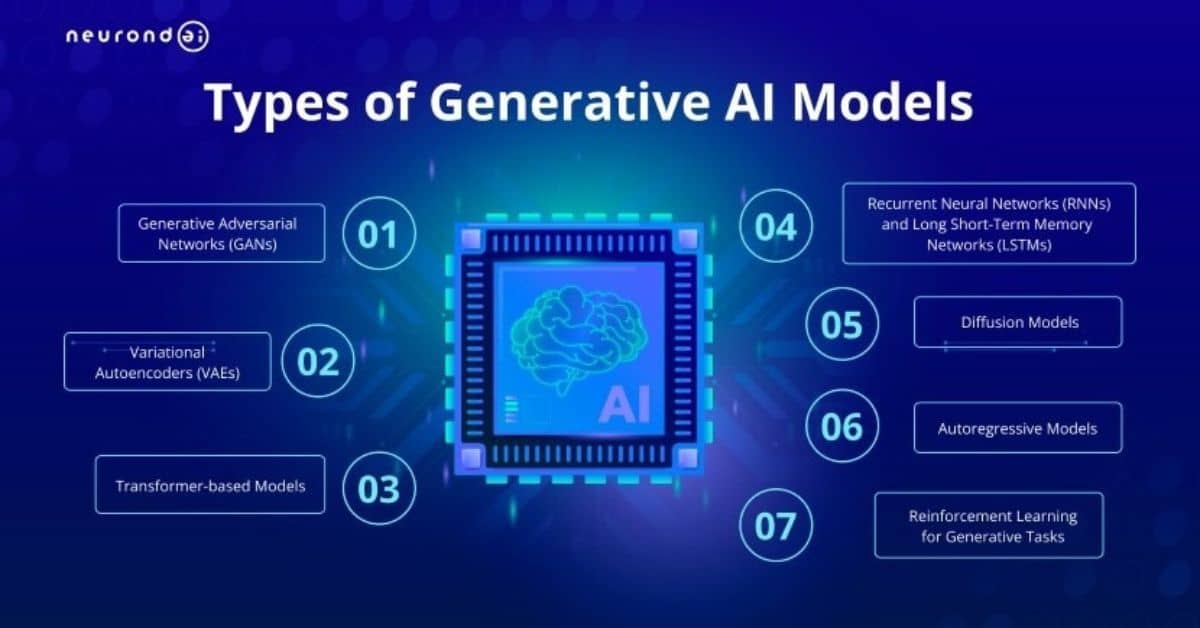
Generative AI refers to systems that create original content based on patterns learned from data. Unlike traditional AI that only analyzes or classifies, generative AI makes something new. It can write articles, draw pictures, or compose music.
At its core, generative artificial intelligence studies huge amounts of information—like books, websites, or photos. Then it generates outputs that feel human-made. Popular GenAI tools make this accessible to everyone, no coding required.
This field has exploded since models like GPT arrived. Today, it touches many industries and sparks both excitement and debate.
How Generative AI Works
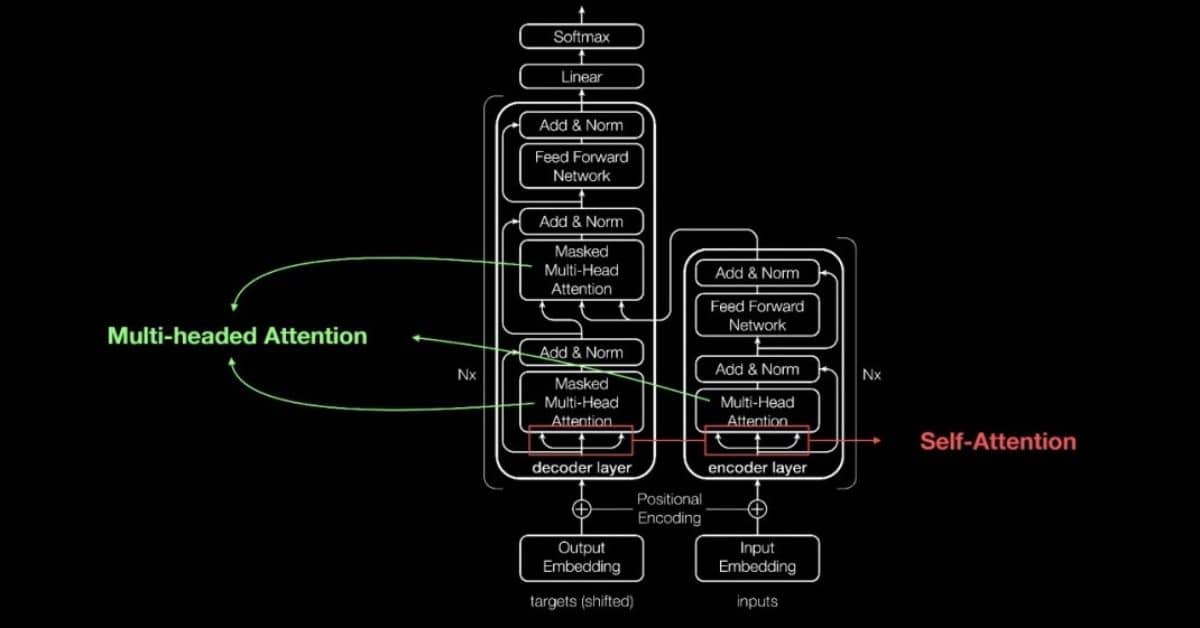
Generative AI relies on deep learning and neural networks. These are computer systems modeled after the human brain, with layers of connected nodes.
Training starts with massive datasets. The model learns probabilities—what words follow others, or how pixels form shapes. Techniques like transformers help process information efficiently.
Large Language Models (LLMs) form a big part of text-based generative AI. They predict next words in sequences, building coherent responses.
For images, models like diffusion systems start with noise and refine it into clear pictures. The process involves feeding prompts, running calculations, and outputting results.
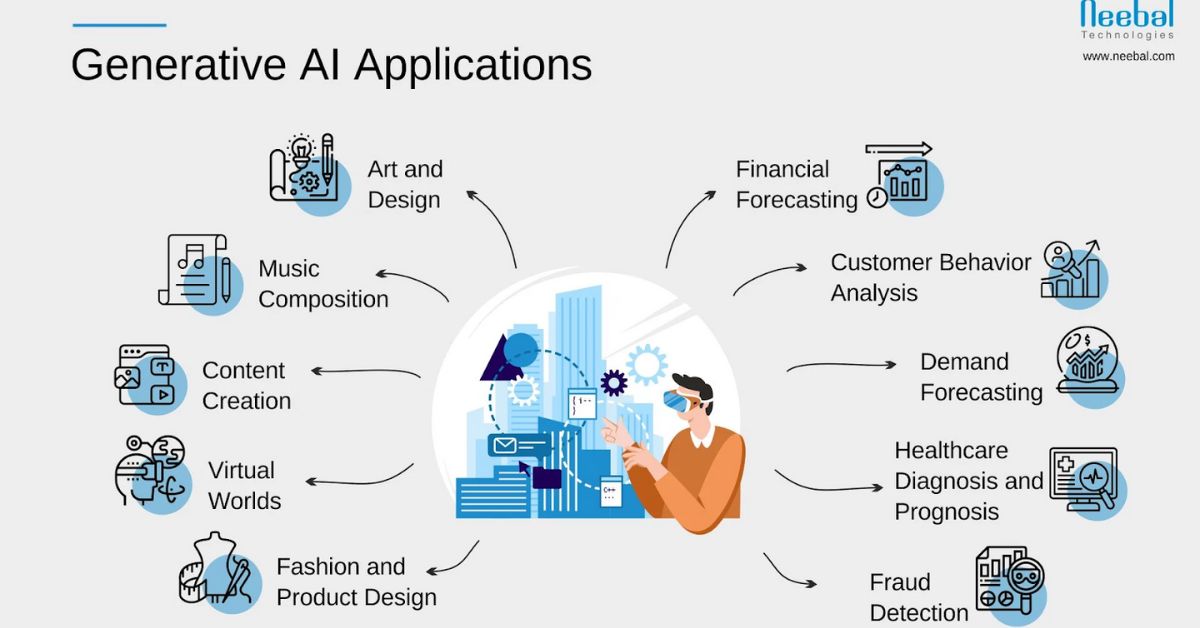
Applications of Generative AI
Generative AI finds uses across many areas. In content creation, it helps write blog posts, emails, or social media updates.
Text-to-image AI turns descriptions into visuals. Artists and designers use it for quick concepts or inspiration.
Code generation speeds up programming. Developers get snippets or full functions from plain English requests.
Music tools compose tracks or suggest melodies. In design, it generates logos, layouts, or product mockups.
Healthcare sees benefits in drug discovery simulations. Businesses use it for market reports, customer service bots, or personalized marketing.
These generative AI use cases show its wide reach in daily work and creativity.
Benefits of Generative AI
Generative AI brings clear advantages. It saves time by automating repetitive tasks, letting people focus on higher-level work.
It boosts creativity. Even non-experts can produce professional-quality content or ideas.
Access to GenAI tools levels the playing field. Small teams compete with larger ones through efficient output.
Innovation speeds up in fields like education and research. Teachers create custom lessons; scientists explore hypotheses faster.
Overall, it increases productivity while opening new possibilities.
Real-World Examples of Generative AI
Several tools highlight generative AI in action. ChatGPT, from OpenAI, handles conversations, writing, and problem-solving with natural language.
DALL·E creates detailed images from text prompts. Users describe scenes, and it produces unique artwork.
Midjourney operates through Discord, popular for stunning visual styles in community creations.
GitHub Copilot assists coders by suggesting lines or blocks in real time.
Other examples include Grok for helpful responses, or Adobe Firefly for integrated design work.
These platforms show how generative AI models reach everyday users.
Challenges and Ethical Concerns of Generative AI
Despite benefits, generative AI faces issues. Accuracy can vary—models sometimes produce incorrect or biased information from training data.
Job concerns arise as automation handles creative tasks once done by humans.
Ethical questions include copyright. Training on existing works raises ownership debates for outputs.
Deepfakes and misinformation spread easily with realistic generations.
Privacy matters when personal data influences models. Companies work on safeguards, but challenges remain.
Future of Generative AI (2025 and Beyond)
Looking ahead, generative AI will advance quickly. Multimodal models combine text, image, and video for richer interactions.
Better efficiency means running on smaller devices. Personalization grows with custom fine-tuning.
Integration into software becomes standard. Expect more focus on responsible development, with regulations emerging.
By 2030, it could transform education, medicine, and entertainment deeply.
FAQs About Generative AI
What exactly is generative AI?
Generative AI is technology that creates new content like text, images, or code based on learned patterns from data.
How does generative AI differ from traditional AI?
Traditional AI analyzes or predicts; generative AI produces original outputs from inputs.
What are some popular generative AI tools?
Examples include ChatGPT for text, DALL·E for images, and Midjourney for art generation.
Is generative AI safe to use?
It offers benefits but requires caution for accuracy, bias, and ethical issues.
Will generative AI replace jobs?
It automates tasks but also creates new roles in oversight and creative direction.
Conclusion
Generative AI stands as one of the most exciting developments in technology today. From understanding how generative AI works to exploring its applications and future, this guide covers the essentials for beginners. As tools improve, generative artificial intelligence will play a bigger role in our lives. Start experimenting with GenAI tools to see its potential firsthand.